
Daoist.Alchemist.Immortal

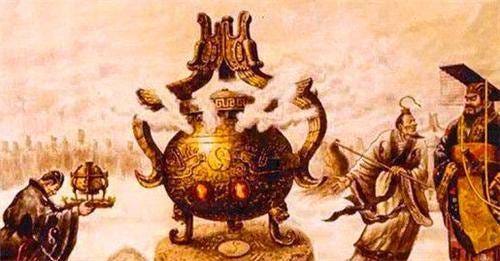
Pictured: Qin Shi Huang Di chased after the Golden Elixir which as that time was an art practiced by the Fangshi since the Daoist religion didn’t exist at that time in history. Have you ever wondered about how all these definitions work? Today’s article is my revisionist take on the categories of everything related to Internal Alchemy. It is revisionist in the sense that it questions the current zeitgeist, but I didn’t make it up myself, in fact it comes from respected scholars like Cheng Yingning, who was the only person in the last 500 years to read the entire Daoist Canon as well as Hu Fuchen who traveled all over China visiting Internal Alchemy practitioners of every tradition in order to deeply understand how the genre works. I’m just a mouth piece for this Xian Xue/Study of the Immortals here in North America. I hope you like my article.
Today I'm going to make a personal opinion post about Neidan and get back to Chuan Dao Ji on Tuesday.
Before writing this I erased a full pages of text about the zeitgeist of present day Daoism and all its problems, but it doesn't feel right to spill all the beans about what is actually going on, besides, it is much nicer to hear positive and life affirming things than listen to cranky old Rob complain.
With that in mind I want to talk about how Neidan works on a social level, a topic that doesn't get enough love and is very important to how we practice.
Prologue: Daoist, Alchemist, Immortal:
In the text Fang Dao Yu Lu the twentieth century Taiwanese master Yang Jingyu discusses the idea that Immortals must follow much more strict protocols to Daoists.
He says that Daoists work according to the idea of “harmonizing the light with the dust,” and practice in the secular world while Immortals must stow themselves away in seclusion at least for a while to practice the Golden Elixir.
This idea is one trend in Internal Alchemy and is not mutually agreed on by everyone, in fact Zhang Boduan said that the True Hermit lives in the city and only lesser hermits seek refuge in the forest.
Either way Yang Jingyu's interpretation of the separation betwee Daoist and Immortal is a twentieth century idea with some historical credibility.
Before him the great twentieth century Sage Chen Yingning said that it may be the case that the method of Internal Alchemy was practiced before Daoism existed and that Internal Alchemy practitioners simply became Daoists as a result of Daoist philosophy being a suitable place to contain their practices of Immortality.
Some of you are going to think that this sounds great while I can already see others rolling their eyes, but for those skeptics among you let me point out a couple useful pieces of information:
1: Immortals existed in Chinese mythology before Daoism: The Shan Hai Jing (Classics of the Mountains and Seas) talks about a land of undying people. This historical legend goes back hundreds of years before Daoism became an organized religion, so it was Daoism that adopted the idea of Immortals, but they didn't invent it.
2: Self Cultivation and Meditation predates the Daoist religion: I don't agree that Guanzi is the earliest meditation text since parts of it were likely written toward the end of the Warring States era, but at the very least Zhuangzi mentions seated meditation multiple times in the Nan Hua Jing and there are other Pre Han Dynasty sources discussing breath work, Dao Yin and other Immortals Arts which predate Zhang Daoling's Heavenly Teachers sect. Thus for those hard nosed disciples of the “no such thing as Chinese philosophy” camp, you have to make some difficult decisions when faced with the abundance of evidence that Warring States officials practiced a non liturgy based state philosophy of Daoism and that as early as 100 BC (just a random number) Han Dynasty literati where practicing “Daoists arts” in the context of a philosophical school that incorporated Daoism, Confucianism, Medicine, Yang Sheng practices, and Cosmology but did not rely on liturgy or complex theories about transmutation of the soul. Not only is this information well recorded in the Later Book of Han and Book of Sui as well as the writings of the Great Historian, it is also backed up by archaeological finds at Mawangdui among other places.
3: Many Daoist Immortals were not part of religious sects: Lu Dongbin, Zhang Boduan, Lu Xixing, Li Hanxu, Huang Yuanji, the disciples of Yin Xi (the name the authors of Xing Ming Guizhi give themselves) among many others were not part of any conventional Daoist lineage. Their involvement in these lineages was retroactively applied so the only argument to include them within the religious ecology of Daoism is faith based but certainly not fact based.
It isn't that ridiculous to think that members of the secular literati such as Lu Dongbin looked at the ideological atmosphere of their day and found Daoism to be the most suitable receptacle for their practices since it already contained the essence of meditative practices in the form of extant Yang Sheng techniques like visualization, breath work, and Dao Yin left over from the Warring States and Han Dynasty.
Now that we have our proofs out of the way, let's get on with the rest of the article.
Part 1: What is a Daoist:
Really quickly, a Daoist is a person who practices the Dao.
That is a glib way to say it, but to extend the idea a little, China didn't have a term to describe “Daoist” until the 20th century when Chen Yingning coined the term 道教徒 Dao Jiao Tu “Disciple of Daoism,” to differentiate from religious 道士 Dao Shi/Daoist Priest and 道长 Dao Zhang/Senior Daoist Priest. Even Dao Shi and Dao Zhang are somewhat nebulously translated to English as “Priest,” and of course the Daoist religion also has the concept of 信徒 Xin Tu/Devotee as a person in the commons who is not a priest or nun, but again none of these terms can really be used to describe Daoist in a holistic way since they always assume some inclusion within a religious lineage.
As I mentioned above, Lu Dongbin, Zhang Boduan and many others did not belong to Daoist religious sects and so within a narrow (modern western) reading of Daoist history they cannot be viewed as Daoists. This is why Chen's Dao Jiao Tu is such an important concept because it reflects a more accurate view of the role secular practitioners played in the development of Daoist ideas.
Thus I go back to my first saying, a Daoist is a person who practices the Dao.
You might ask: “Confucians also have a Dao, in your view are they Daoists,” and my answer would be that Confucians actually cultivate De which is another way to say they mainly focus on developing their personalities in order to become harmonious centers around which society can organize itself.
In any event, in the case that some Confucians have and do practice their own version of Neidan, they are engaged in 修道 Xiu Dao/Cultivation of the Dao which is one of the three major ways we describe Daoist practice.
My take is that although Confucians, Daoists and Buddhists all practice Xiu Dao, the difference between them is that Confucians and Buddhists practice from a Confucian and Buddhist ideological stance while Daoists use their own ideas, this is where the difference is and why one might call themselves a Disciple of Daoism rather than a Confucian or Buddhist.
Part 2: What is an Alchemist:
It is a word I'm borrowing for convenience, but the idea of a 丹士 Dan Shi/Alchemist is not applicable to Internal Alchemy and is a historical term used to describe people who practiced Waidan.
I just use the term as a place holder to differentiate people who practice Neidan and Immortals since they exist at two different levels of practice.
Part 3: What is an Immortal:
This is another messy place since just like the term Daoist, there have been many interpretations of what an Immortal is throughout Chinese history.
The Daoist religion holds that an Immortal is an ascended human being who essentially becomes part of the order of deities.
The Internal Alchemy school only obliquely defined this term and the only true Internal Alchemy doctrine of Immortals is found in the Chuan Dao Ji “True Immortals” chapter where there are five types of immortals listed including ghost, human, earthly, spiritual, and heavenly immortal.
The crux of the chapter is that different practices lead to different results which each have an impact on what happens to a person after their body dies.
Wang Chongyang revolutionized Daoism by dying in front of his students since this made it impossible for them to spread stories about how he went to the mountains and flew away on a stork or something equally preposterous (although Sun Buer is said to have ascended in broad daylight).
Chen Yingning further revolutionized the idea to refer to a person with a certain level of ability in Internal Alchemy.
Both of these views clarify and separate out the idea of Immortal not as a person who's body lives forever, but as a person who realizes the true eternal nature of their own being.
What implications this has to the time after physical death may be further disputed, but the basic of how modern Neidan practitioners use the term immortal should generally follow Chen Yingning's pragmatic view rather than older faith based views with no evidence.
It should be noted that the term Immortal is a terrible translation of 仙人 Xian Ren since 仙 Xian means a person who cultivates themselves in the mountain, not a person who lives forever but just like the Dao De Jing, I prefer to blend the light with the dust so I won't try too hard to push a new term to describe Xian.
Part 4: How did the early generations of Alchemist Immortals Practice:
This is the important part of the article since now that we've established the basics we can look more deeply into how the original internal alchemy masters practiced and not get caught up in mystical nonsense.
The key point is that the development of Internal Alchemy had a several hundred year incubation period between the time of Wei Boyang and Zhang Boduan.
It was during that time that people began to experiment with practices which could develop the innate energy of the body and return it to be stored in the Dantian.
During the incubation stage there were hundreds of practices, many of which are cataloged in the Daoist Cannon and Small Daoist Cannon.
These practices could have included breath work, visualization, Dao Yin, apophatic meditations, and much more and often also included refinement of the external elixir.
This period did not use the distinctions of Neidan and Waidan, but instead called Alchemy 炼丹 Lian Dan/Refining Elixir.
It was only after Zhang Boduan reinterpreted the teachings of Lu Dongbin the Neidan was formed. Although in the generations after Lu Dongbin many people tried to establish practices based on his doctrine, it seems that the only two figures to come even close were Chen Xiyi and Cui Gong who are very marginal figures in the Neidan world compared to Zhang Boduan.
Zhang Boduan's interpretation of Neidan became so popular that later generations of Neidan practitioners largely copied him and thus Neidan came to be a defined genre.
Honorable mention goes out to Wang Chongyang for developing his own method which significantly diverged from Zhang's but anyway everyone either practices a variation of one or both systems with all the other major schools of Neidan being influenced by these two sources.
What we can learn from this is the the Alchemical Meditation world underwent hundreds of years of trial and error before any standards were achieved.
Furthermore and most importantly, Zhang Boduan and Wang Chongyang must have figured out their methods on their own through experimentation with the tools available to them at that time in history.
Daoist religious disciples like to believe the stories that these masters were visited by ascended immortals, but it is more likely the truth that they figured out how to practice on their own or perhaps sought out teachers and then made up these spiritualized narratives because within traditional Chinese culture it would have been taboo to claim credit for inventing the arts.
Part 5: How did subsequent generations practice:
Here is the good part, the subsequent generations of practitioners also didn't practice an orthodox Neidan method.
A close reading of Neidan history shows that the initial disciples of the Southern School only lasted about four generations and gave way to the Northern School which itself changed dramatically in its fourth generation.
What does this mean?
First it means that when someone calls themselves a Southern or Northern school practitioner they are describing their practice approach, not lineage. Sorry, there is no hidden Ma Danyang lineage of Neidan that persisted from the Yuan Dynasty until today, that is a total fabrication since Neidan has never had a lineage system. People become confused because religious Daoism does have a lineage system and of course Martial Arts has a lineage system and so does Qigong, but not Neidan. If there was one it would be much more prominent and well recorded. Lots of fortune tellers who practice Neidan like to spin stories to wide eyed foreign customers, but let's be real and follow credible scholars like Chen Yingning, Wang Mu, Hu Fuchen etc... Daoist registers can also help with this and one might wonder how someone could be a linage inheritor of any of the Seven Quanzhen disciples without being part of Quanzhen and taking vows, but I digress.
Second it means that after the Southern and Northern Schools later generations of practitioners made their own interpretations of the practice.
This past month I taught a really enjoyable course on Zhang Boduan's Jin Dan Four Hundred Words, one of the primary Southern School texts, but I had to be really careful to contextualize the text within the Southern School's theoretical foundation since my own practice is much closer to Huang Yuanji's Middle School which has its own interpretation of Zhang's writings that are substantially different from the Southern School.
This is my point, later generations of Neidan practitioners tended to take one of two directions:
1: Start from Pre Heaven practice:
This approach was described by Chen Yingning as Tian Yuan Dan Fa/Heavenly Origin Alchemy Method and focuses on Shen Qi He Yi/Breath and Spirit Merged as One and the Single Opening of the Mystery Gate.
The practice is simple and relies on the deep state of meditative apophosis to generate Pure Yang energy and spiritual illumination early in practice.
2: Start from Post Heaven Practice:
These schools such as the Wu Liu School, Chen Zhixu's synthesis of the Northern and Southern Schools, and various others make a different reading of the old classics and emphasize the use of Post Heaven intentionality early in practice in order to generate Small Medicine in the meridians before generating the Large Medicine that results from deep meditation in the Pre Heaven State.
Some Daoists are going to disagree with me here but this is mainly because our view of Pre Heaven is fundamentally different.
If we use the Tian Yuan approach to practice Pre Heaven refers to a state of Primordial Emptiness in which Yuan Jing, Qi and Shen merge with each other and become nondescript while Post Heaven refers to sensed phenomena, even within the purview of mental concentration.
That is to say that unity in mixed emptiness is viewed differently than unity of mental focus.
A mature view would be to say that this is the influence of the two different ways of thinking I listed above.
In other words, a worldview of the Wu Liu School could infer that concentration is required to enter the Pre Heaven because of the Buddhist influence of the school whereas other schools like the Middle School of Huang Yuanji or Li Hanxu's Western School rely more on the Daoist concept of Primordial Chaos.
In the long run both approaches line up since to achieve high level results one absolutely must be absorbed in the void emptiness of the Dao, but the route to get there is quite different.
Thus when we think about how later generations practiced, they each made their own interpretations of the generations preceding them and came to different conclusions.
The beauty of old documents like Understanding Reality is that their meaning is not spelled out in absolute terms so there is a chance to embellish and modify based on experience, assuming one is experienced enough to do so without leaving the basic principles of Internal Alchemy practice.
Part 6: Today:
Today Internal Alchemy is often wrongly viewed as an orthodox school of meditation with certain absolute parameters (which are oddly often poorly defined in sayings like “collect the ingredients to form the medicine” and so on) and is somehow too sacred to question critically.
The fact is that the ancestors of the tradition all had different views and different practices and for every popular document there are scores of unpopular documents with different practices.
What makes a document or school popular is that it produces results in many people who practice it, but Dao Zang has hundreds of Internal Alchemy documents, many of which are wildly heterodox in nature and bear no resemblance at all to the Seven most standard schools.
What this ought to mean to us today is that with careful enough inquiry we can have access to quite a big tool kit and that the progress of the tradition is by no means finished.
I have two closing statements:
1: When we make a broad study of Internal Alchemy schools it is almost guaranteed that it will take a long time to understand the fundamental differences between the schools.
This can lead at first to imagining that because they share common terms they are quite similar, but when you really get into the weeds there are big, important differences between them. We need to be meticulous and patient in extracting information from documents and talk to as many real experts as possible so our information is complete.
2: The West is currently in a phase of Daoist Alchemy that overlaps with the Tang Dynasty Jin Dan School:
Right now we are in a competition about how Internal Alchemy will be explained in the West where many divergent schools of thought are all fighting it out to see which ones stick and which fall by the wayside as a standard is established.
This is very similar to the late Tang Dynasty period in which people like Chen Niwan, Cui Xifan, Liu Haichan and others each espoused their own view of the Golden Elixir and how to practice it.
I am not so brave as to say that because my view of Neidan is more fully informed than most of the other teachers it will become the standard, because it is not clear to me that a traditional view of Neidan is what will take hold in the West.
This might sound weird, but think about it from this perspective:
Most Western students of Neidan are interested in health benefits and to dabble in foreign spirituality.
Most of the major doctrines of practice being offered today can perform that function, even if they aren't able to manifest higher level aspects of practice.
What I offer is very high brow and requires a big investment in learning theory while most of the other schools are largely based on practice.
I used to get frustrated because the number of people who want to really dig deep into what you actually need to know to study traditional Neidan is limited to a small handful of very serious people, while the passionate dabbler class of people who like stories and playing with their genitals as a way of generating hot sensations in their spines seems to be much more massive.
These days I've come to the conclusion that it would be insane to assume that the traditional view of Internal Alchemy will become dominant in the West because we have to run the experiments on ourselves, not just copy the old theory blindly.
I think that if Internal Alchemy is to survive and thrive in the West and furthermore if Daoism is to survive and thrive it will have to take on characteristics of our culture.
My way of doing this is through scholarship in order to establish a practice rooted in concrete and verifiable phenomena which can be judged through the classics, but this is just one view of many and I've come to fully accept this view as marginal, but hopefully helpful in establishing missing parts of the discussion surrounding Internal Alchemy in the West so we can gradually create out own style over several generations.
So that's what I've got to say for now about that, see you on Tuesday with more Zhong Lu Chuan Dao Ji where we look at late Tang Dynasty interpretations of the Golden Elixir.
By the way, the courses this month are going to be awesome so why not consider joining us in our ongoing adventures in Daoist scholarship!